
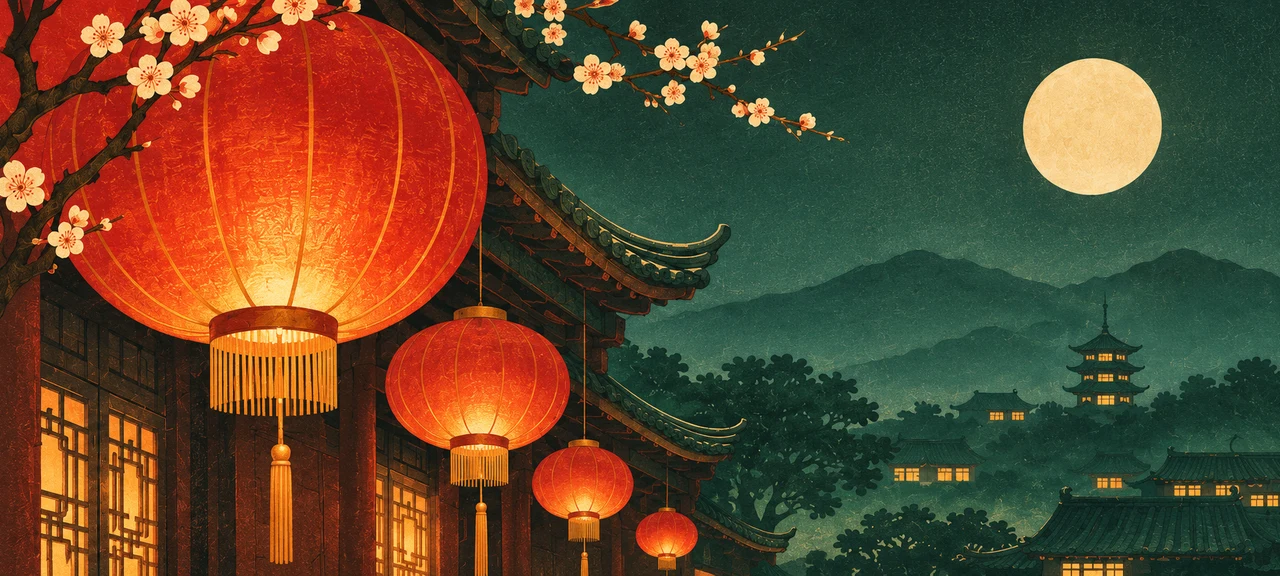
Origins & meaning
Start with the calendar The traditional Chinese calendar is lunisolar. It follows both the Moon and the Sun, so the festival moves between dates in the Gregorian calendar. Check the dated calendar on this page when planning a celebration. Three moments to remember New Year's Eve is the evening before the first day, when many families gather for a reunion dinner. New Year's Day begins the new calendar year. The Lantern Festival, on the fifteenth day of the first lunar month, brings the traditional new-year celebration period to a close. One holiday, many experiences Travelling home, preparing food and visiting relatives can matter as much as public celebrations. A family's memories help explain why the festival matters to them. Other cultures also celebrate Lunar New Year, with their own names and traditions.
Living traditions
Read the decorations Chunlian are paired strips of red paper carrying written wishes, often placed beside a doorway. Paper cuttings add festive images to windows. Ask someone to explain a decoration's words or design. Share good wishes Hongbao are red envelopes containing money, given as gifts in many families. Who gives them and when depends on the family and occasion. If you are a guest, ask your host about their usual practice. A greeting you can use 新年快乐 — Xīnnián kuàilè — Happy New Year. Try saying it to a friend, and ask what greeting their family prefers.
A place at the table
The reunion dinner shares time as well as food. Dumplings are familiar new-year foods in many northern households; rice cakes and other local dishes feature elsewhere. Food can carry wordplay. Yú, the Mandarin word for fish, sounds like the word for abundance. A fish dish can therefore express a wish for plenty in the year ahead. Ask what a dish means in the household you are visiting.
Make it part of your story
Try it in 15 minutes You need paper and a pen. 1. Write 新年快乐, its pinyin and the English meaning on a card. 2. Add one personal wish for the recipient. 3. Practise the greeting, give the card to a friend and ask about a new-year memory. Visiting a celebration? Read the organiser's information or ask your host what to bring and which activities welcome visitors. “What does your family usually do for New Year?” is a useful way to begin a conversation.
Customs vary by place and family. Legends are identified as folklore, and suggested activities offer ways to begin exploring.
How we celebrate
Add your chapter.
Share a photo, a recipe, or a family tradition.
Join the conversation
Ask a question or share a tradition. New comments are reviewed before appearing publicly.
Sign in to comment
The conversation starts with you.