
Origins & meaning
Where it fits Spring Festival begins on the first day of the first lunar month. Lantern Festival comes on the fifteenth. This sequence helps explain why lantern events often belong to a wider new-year programme. What to notice Look at how light, colour and gathering together shape the celebration. Read the description of a particular display or ask a participant about its local meaning.
Living traditions
Lantern displays turn streets or event spaces into places for an evening walk. Some include dengmi, or lantern riddles, which invite visitors to guess an object, word or character. Chinese-language riddles may use character shapes or wordplay. Ask someone to explain a clue that is hard to translate. The explanation offers a way into the language as well as the festival.
A place at the table
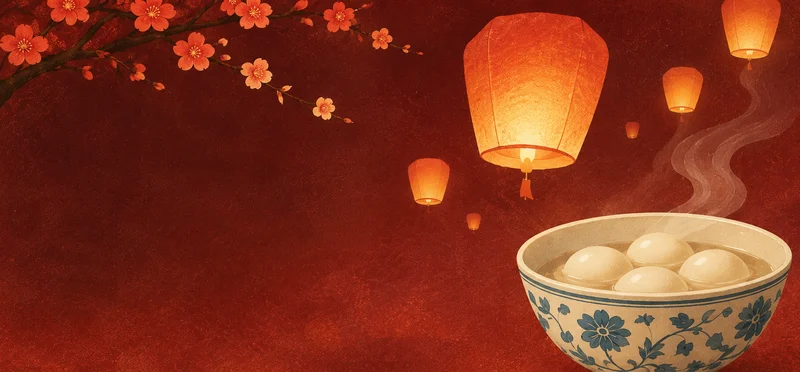
Tangyuan and yuanxiao both use glutinous rice flour. Their round form is associated with reunion. The useful difference is how they are made. Tangyuan are formed by wrapping soft dough around a filling. Yuanxiao are commonly built up by rolling moistened pieces of filling in dry rice flour. Ask a maker to show you, then compare the textures and fillings.
Make it part of your story
Try a beginner riddle in 10 minutes Write this original practice clue on a card, with the answer on the back. “I carry light without being the sun. You can hang me up or carry me on a festival walk. What am I?” Answer — a lantern. This is an English practice activity inspired by lantern riddles. Invite a friend to guess, then invent a second clue together. At a real display, choose one lantern and describe it before reading its explanation.
Customs vary by place and family. Legends are identified as folklore, and suggested activities offer ways to begin exploring.
How we celebrate
Add your chapter.
Share a photo, a recipe, or a family tradition.
Join the conversation
Ask a question or share a tradition. New comments are reviewed before appearing publicly.
Sign in to comment
The conversation starts with you.